Guided PPE program services

Jackson Safety helps teams move from hazard notes to a stocked PPE program.

Safety programs can stall when purchasing, frontline supervisors, and distributors use different language for the same hazard. Jackson Safety service support is designed to reduce that friction. We help teams translate impact, splash, welding, dust, visibility, and replacement-part requirements into practical product groups. The result is a cleaner issue list, fewer ambiguous substitutions, and a more maintainable catalog for recurring orders.

The process is intentionally grounded. We do not promise a universal product for every job. Instead, we help you document how each category will be used, which standards should be referenced, and where a safety manager should confirm site-specific risk before rollout.

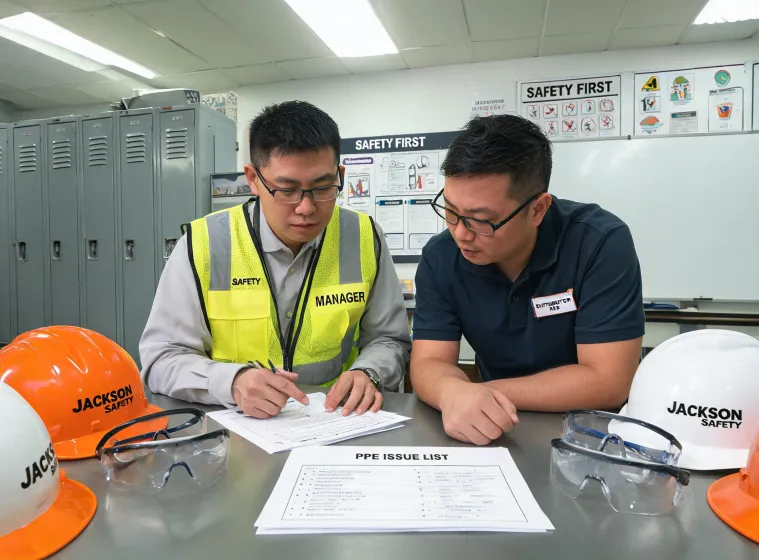
Safety manager reviewing PPE service plan
Service cards

Practical support for the common moments where PPE programs drift.

Hazard-to-product mapping

We organize requests by job role and exposure. A welding cell may need a helmet, safety glasses under the hood, face shield backup, and replacement lenses; a construction crew may require hard hats, impact eyewear, and high-visibility gear. Mapping first keeps buying lists from becoming a loose collection of part numbers.

Distributor stocking guidance

Distributors can request category notes for core and alternate items, helping branch teams maintain availability without creating uncontrolled substitutions. We highlight the product family, relevant use case, and what should be confirmed by the site safety owner.

Documentation packet planning

Program owners often need data sheets, care instructions, standard references, and replacement part lists in one place. Jackson Safety helps identify the documents needed for internal review and worker communication.

Rollout and reorder review

After a first issue list is defined, we help teams set review points for reorder quantities, lens replacement, helmet suspension checks, and product feedback from supervisors. The service keeps the program usable after launch.

Program questions

Answers that help teams decide what to ask for next.

These questions come up in most early PPE program conversations. Use them to prepare your request so the reply can be specific to the work area rather than generic catalog language.

Name the hazard and the standard family when known. Examples include ANSI/ISEA Z87.1+ for high-impact eyewear, EN 166 optical class discussions for eye protection, and ANSI Z89.1 Type I or Type II for hard hats. The final selection still depends on the workplace assessment.

Usually no. A reliable list separates welding, maintenance, construction, and visitor PPE so fit, impact, heat, splash, and visibility needs stay clear. Standardizing the format is useful; forcing one item across unrelated exposures is not.

Share annual usage, preferred packaging, branch location, replacement lens needs, and any customer-required documents. Those details help the response focus on stocking and support rather than a broad product list.
Before and after

From scattered PPE requests to documented program language.

Before

Teams ask for "safety glasses," "a welding hood," or "hard hats" without noting impact rating, lens environment, replacement parts, or role-specific risk. Purchasing receives part-number substitutions that look close but do not match the intended use.

After

The request names the category, job role, standard reference, packaging preference, and approval path. Distributors can respond with a tighter set of Jackson Safety options, and safety teams can keep the program consistent across reorders.

Start the service conversation

Send the role, hazard, and stocking details you already know.

Jackson Safety can help convert those notes into a cleaner product discussion. Include the work area, crew size, preferred distributor channel, and any standards your internal policy already names.

Request support